I would likely have rated this book five stars if not for its somewhat slow start; however, once it gained momentum, I found it impossible to put down. The characters are exceptionally well-developed, and as I delved deeper into the story, I genuinely grew attached to their fates. Initially, the main character comes off as somewhat naive and childish, particularly in her attempts to rationalize the unexpected inheritance she has received. Yet, as the narrative unfolds, she gradually evolves into a more mature and relatable figure.
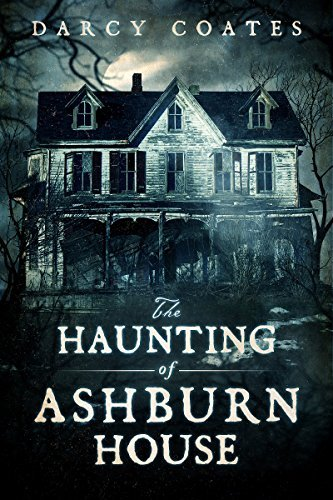
The setting of the story is a small town, which I believe is portrayed quite authentically based on typical small-town dynamics. The plot centers on Adrienne, who unexpectedly inherits Ashburn House from an aunt she had no idea existed, as her mother had always claimed that their family tree ended with her. Adrienne initially dismissed a vivid dream she had about the house as mere fantasy, only to discover that the dream was a prelude to this shocking reality—now the house belongs to her.
However, the seemingly idyllic inheritance is shadowed by ominous rumors and chilling myths surrounding both the house and her late aunt. The narrative reveals a dark history; the town has been haunted by a gruesome family murder committed many years ago, with no one ever brought to justice, and this haunting legacy looms over its residents like a dark cloud. As Adrienne unravels the secrets of her new home, she begins to confront the possibility of ghosts, both literal and metaphorical, as she fights to escape the eerie fate that seems ready to ensnare her.
The ending truly captivated me, completely blindsiding me with a twist I never saw coming. It’s a masterful turn of events that adds an incredible layer to the story. I wholeheartedly hope that others who read this book find as much enjoyment in it as I did!
I would officially rate this book at 2.5 stars, primarily because it isn’t the absolute worst thing I’ve read this year, but it’s certainly a contender for that unenviable title. My expectations may have been a bit too high after encountering a number of enthusiastic reviews—though I admit I read those reviews after I had already begun the book. The praise floating around in those comments led me to believe that I was merely waiting for the narrative to reach its more compelling moments. While the initial chapters were relatively decent and began with a promising pace, the story quickly stumbled as the character development devolved into something quite one-dimensional.
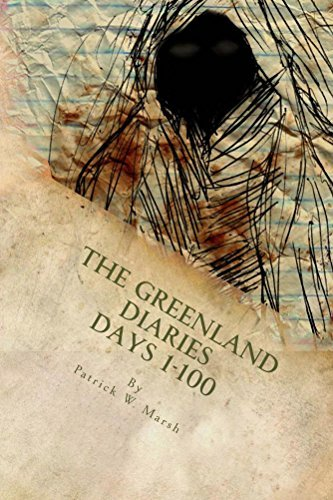
Written in the first-person perspective, the story unfolds through the eyes of a man and his dog, creating a framework that allows for only a handful of supporting characters to make appearances. Given this limited cast, I anticipated a higher degree of action or at least an engaging narrative style that would provide insights and explanations for the disturbing events taking place. Unfortunately, I found none of these elements to materialize throughout the narrative.
It all kicked off with the ominous beat of a drum in mid-April 2011, after which the monsters emerged and triggered a cataclysm that transformed life as we know it. The protagonist, bewildered and disoriented, struggles to comprehend the unfolding chaos as the world morphs into a place that becomes increasingly green and sweltering with each passing day, while the nights devolve into harrowing episodes of evasion and survival.
I was genuinely intrigued by the premise of the book, and I found myself emotionally invested in the dog—perhaps even more so than the human character. This phenomenon is telling, as the human protagonist left little impression on me; I cannot even recall if he divulged his name at any point, which underscores how detached I felt from him. In stark contrast, the dog’s name remains vivid in my mind, along with the endearing moments it brought to the story.
The writing itself is marred by numerous grammatical and spelling errors, alongside instances of word misuse that grew increasingly distracting, though some could be overlooked. To summarize, while the book had its moments and was certainly not devoid of merit, it ultimately fell flat for me personally. It took me a painstakingly long 20 days to finish, as I could only manage to read it in short spurts. Additionally, the monsters that were supposed to evoke fear failed to do so, lacking the terrifying essence that I had hoped for.
In the end, it’s all up to you to decide whether to give it a go; it simply wasn’t my cup of tea.
I thoroughly enjoyed this captivating story, and I found myself immersed in the characters as they were gradually introduced. Last year, I read book 11, drawn in by its Christmas setting, which made it a perfect addition to my holiday reading list. I enjoyed it so much that I was eager to journey back to the beginning to uncover the origins of these characters and understand their development leading up to that point.
From the very first page, the narrative held my attention with its charm, despite its relatively simple and straightforward plot. The main characters are vividly portrayed, making it easy to connect with their personalities right away. The world they inhabit feels remarkably familiar—akin to our own lives—which adds an extra layer of relatability. Although there were a few moments of confusion regarding which character was speaking, that was a minor issue in an otherwise engaging story.
At the center of the tale is Steven Hall, a character who has always been dubious about anything supernatural or paranormal. His skepticism even extends to religion, shaped by his mother’s intense obsession. This aspect of his upbringing provides a deeper understanding of his complex personality. Upon purchasing an old house, Steven suddenly finds himself tormented by the restless spirits of murdered children. This eerie experience begins to challenge and sway his long-held views on the unseen world around him.
Desperate for answers and support, Steven turns to his father, Roy, who has always possessed a sense of the extraordinary that Steven never quite understood. Roy steps in to assist his son in confronting the malevolent entities haunting their home while simultaneously guiding him toward discovering his own latent abilities regarding the supernatural. Yet, as is often the case, just when they begin to find clarity, their situation seems to spiral further into chaos.
I wholeheartedly recommend this book, as I found it to be an enjoyable read, and I believe the series will only grow increasingly rich and engaging as it progresses. Dive into the River and enjoy the adventure that awaits!
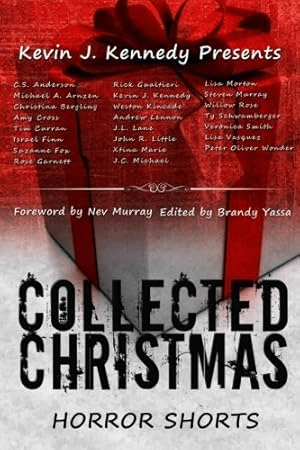
My rating is an average of the 20 narratives included within its pages. It took me a rigorous four months to work my way through this book—a testament to my determination to reach the end, despite the challenges I faced. Many of the stories felt rather uninspired, making them a struggle to engage with, especially when even the shorter tales seemed to drag. A couple of times, I found myself setting the book aside in favor of other activities, as I was desperately in need of a break from the lackluster content.
Fortunately, the final four stories were engaging enough to carry me through the finish line, with a few memorable entries sprinkled in the middle that reignited my interest and encouraged me to persist. However, I must confess that I found these tales to be far from terrifying. Perhaps some readers might encounter a jump or two; however, they failed to evoke any genuine fear in me.
I cannot wholeheartedly recommend this anthology, as the experience of reading it felt like an arduous journey rather than an enjoyable escape. Interestingly, I had previously read works from only one of the featured authors, whose contribution I appreciated—even if it was quite mild in its thrill.
In summary, this collection may be worth a read if you’re curious about what these authors consider frightening, but be prepared for an underwhelming experience, as it appears they possess a notably low threshold for true horror. I’m ready to move on!
Based on an average of my rating it comes to 3.4 stars for the entire book.
I’ve revisited some familiar stories recently, and I’ve found that listening to audiobooks adds a unique dimension to the experience. The nuanced performances by various narrators bring elements of the tales to life in unexpected ways. Each narrator infuses their own style, which can significantly alter the listener’s perception of the story. The variety of genres—ranging from fantasy to science fiction, and even horror—makes each listen an adventure in itself.
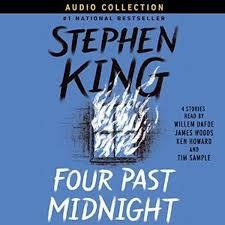
**4.5 stars: ‘The Langoliers’ narrated by Willem Dafoe.** This story remains one of my top favorites, a gripping staple that never fails to entertain me. Dafoe’s vocal delivery is fantastic; he possesses a remarkable ability to build tension, which is crucial as the passengers begin to unravel the mystery of their predicament. The narrative follows a routine flight that unexpectedly descends into terror as the characters grapple with their bizarre situation: they’ve become lost in an unsettling limbo, with no clue as to the fate of the other passengers. The ensemble cast portrays a diverse array of personalities, each contributing to the overall tension and suspense as they navigate their harrowing circumstances.
**2.5 stars: ‘Secret Window, Secret Garden’ narrated by James Woods.** Unfortunately, this story has never resonated with me, and my feelings haven’t changed in this audio format. Despite my appreciation for the source material, Woods’ narration falls a bit flat—it lacks the engaging energy I hoped for. The plot centers on a tense standoff between a writer and an enigmatic figure who claims that the story has been stolen from him, leading to dangerous consequences. While this concept draws parallels to other King tales I’ve enjoyed, it ultimately fails to stand out, leaving me wanting more depth and excitement.
**4.0 stars: ‘The Library Policeman’ narrated by Ken Howard.** Upon starting this narration, I couldn’t initially place Ken Howard, but once I recognized his distinctive voice, I became completely immersed. His performance was a joy to listen to, effectively bringing the characters and their eerie world to life. This slowly unfolding tale lingers with an unsettling sense of dread. The local library, typically a sanctuary for readers, is depicted as a place harboring dark secrets and lurking dangers. Howard expertly balances the mundane and the sinister, making for a vampire story that surprises with an ingeniously hidden twist. The characters are intricately developed, each contributing peculiarities that enhance the overall chilling narrative.
**2.5 stars: ‘The Sun Dog’ narrated by Tim Sample.** While I couldn’t recognize Tim Sample’s face, his narration is solid; he delivers the story well, even if it didn’t particularly captivate my attention. The pacing here is slow, evoking a sense of anticipation as it connects to other stories within the King universe, which I find intriguing. The plot revolves around a boy who receives a seemingly perfect camera as a birthday gift, but like many King stories, it hints at underlying ominous themes. As the boy interacts with the camera, he begins to unravel a potentially malevolent tale that he wishes to leave unfinished. Although I appreciated the connections to other narratives, the story didn’t quite hold my attention as much as I had hoped.
Listening to these stories, especially if you’ve read them before, is likely to evoke similar feelings and nostalgia. Stephen King has consistently offered me gripping tales throughout the years, and I keep returning to his work because of the satisfaction it brings. If you haven’t yet explored his audiobooks, I wholeheartedly encourage you to dive in—you’ll likely find as much to enjoy in the spoken word as you have in the written page!
While I found aspects of this story enjoyable, it didn’t fully captivate me from the outset. Prior to delving into this full-length novel, I had explored its shorter introductory version and was intrigued enough by the premise to give the complete story a chance, hopeful that it would provide a richer experience. To some extent, I was right; the novel did offer more detailed insights than the initial book, allowing a deeper exploration of the narrative. The plot itself was decent and relatively easy to follow, especially after navigating through some of the filler content that occasionally interrupted the flow.
One of my main critiques lies with the character development. I found the characters frustratingly underdeveloped, feeling more like sketches than fully fleshed-out individuals. They often appeared two-dimensional, primarily defined by their societal roles—husband, wife, etc.—rather than possessing distinct personalities or motivations that would make them feel more relatable. The Sheriff exemplified this issue; he fit snugly into the stereotype of a small-town lawman, embodying the wary protector who distrusts the wealthy outsider and is suspicious of newcomers in general. This characterization struck me as somewhat odd, given that he had lived in the community for many years and should have had a clearer understanding of its history and dynamics.
The language and dialogue used throughout the book effectively complement the characters, providing insights into their personalities in various contexts. However, even with this stylistic strength, it didn’t completely compensate for my desire for more depth in the character arc.
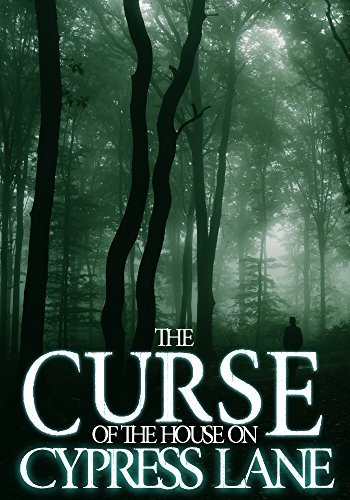
Set in the eerie swamps of Louisiana, the narrative centers around a creature that haunts the cursed house where dark memories linger—a place that the small town of Ocoee has largely chosen to forget. The terrifying truth is that history often has a way of repeating itself, which poses a significant threat to those unaware of the dangers looming just beneath the surface.
In conclusion, I would recommend giving this book a read. While it has its shortcomings, the intriguing premise may resonate with you, allowing you to form your own opinion about the work.
The book initially didn’t captivate my interest right away, but as I continued reading, it gradually became more engaging as I learned more about the characters and their complex situations. The narrative’s buildup is rather slow, yet it is not lacking in subtleties; the connections between various plot points are evident almost from the outset. What I found intriguing is that this novella claims to be the starting point of a larger narrative, but it feels misleading, as the events that unfold seem to have roots much deeper in the past than what is presented. I wish the author had provided more background about the house and the individuals who played a crucial role in setting everything in motion. As this is my first encounter with this author, I’m curious to explore his storytelling methods further, as every writer has a unique approach to story development.
The central setting, a grand old house at the end of Cypress Lane, is steeped in history, intricately woven with the fabric of the small town of Ocoee, Louisiana. The Cooley family becomes deeply entwined in this enigmatic history, finding themselves in a harrowing fight for their survival, caught in circumstances beyond their control. The protagonist, Owen Cooley, has been unemployed for six months with no promising leads on the horizon. When he receives an unexpected job offer after a rather typical phone interview—one that would necessitate a drastic move for his family—he eagerly seizes the opportunity without really delving into the details about the place he’s being sent to. This situation embodies the classic adage: if something seems too good to be true, it likely warrants a closer examination. Owen certainly should have looked a bit deeper, especially for the sake of his family.
Despite its slow start, the story intrigued me enough that I wanted to continue exploring the mysteries surrounding the house and its inhabitants. While it didn’t evoke outright fear in me, it undeniably carries a pervasive atmosphere of darkness that resonated with my taste. I would certainly recommend this book to those who are in search of a horror read filled with potential and rich narrative threads.
This is the first work I have encountered by this author, and it has certainly piqued my interest enough to explore more of their writings and discover how the narratives evolve. The characters were fairly well-developed, yet I felt they could have benefitted from deeper backgrounds. An exploration into the histories and motivations of the side characters would have enriched the overall experience and offered a more comprehensive understanding of the dynamics at play.
The story begins with a rather slow pace, taking its time to establish the setting and introduce the characters. However, midway through the narrative, the pacing begins to quicken, leading to a compelling crescendo where the plot takes on a life of its own, drawing me in more forcefully with each passing chapter.
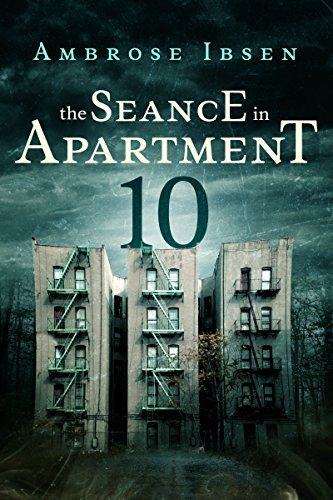
The protagonist, Tori, moves into a dilapidated studio at the eerie Lamplight Complex, only to find herself entangled in unexpected supernatural occurrences. A dark presence lurks within the walls of the aging building, and with only a couple of residents, it soon becomes apparent that the entity has limited options for interaction. The tension escalates when Tori invites friends over to celebrate her new home, and they unwittingly engage with a Ouija board. This fateful decision unveils the perilous consequences of meddling with the unknown and the veil between the living and the dead.
As the story progresses, Tori’s reality begins to unravel, spiraling toward chaos and what feels like an impending madness. Though not overtly terrifying, the narrative evokes an unsettling sensation that leaves a lingering feeling of unease, as if something ominous is lurking just out of sight.
Overall, this book serves as an engaging starting point for my journey with this author and might prove to be a suitable introduction for others as well. If you’re a newcomer to their work, this story could effectively draw you into their unique style and storytelling.
This was my first encounter with this author’s work, and I found this short story exceptionally well-crafted. It has piqued my interest in reading more of his works. The narrative is engaging, with several intense moments that are effectively executed. The characters are surprisingly developed for the story’s brevity.
The local children have always whispered that the old hardware store was haunted. But do ghosts really exist? After being left by her boyfriend, Sandy needs to find affordable housing and stumbles upon an apartment above the newly renovated hardware store. Disbelieving in ghosts, she’s thrilled to find such a bargain. However, as odd occurrences unfold, she begins to question her disbelief.
It simply didn’t resonate with me. Despite its high ratings and popularity, it failed to capture my interest. Perhaps I’ll reconsider it in the future if the opportunity arises. However, the inability to connect with any of the characters was a significant drawback for me, even though I persisted well beyond the usual stopping point.
"I have enough time to rest, but I don't have a minute to waste". Come and catch me with your wise words and we will have some fun with our words of wisdom.